
Table of Contents
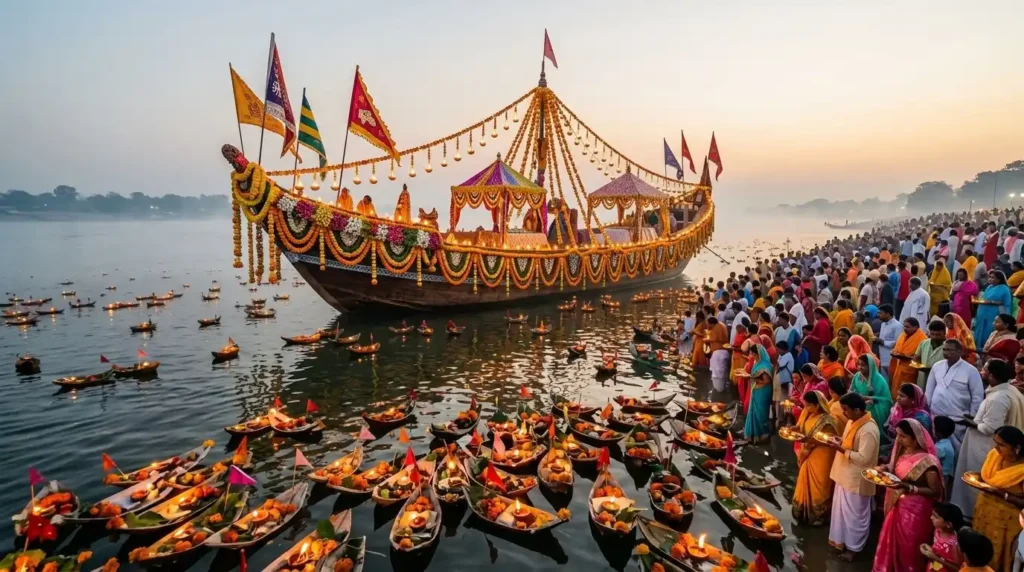
There is a particular hour in Cuttack — somewhere between the last dark of night and the first grey of the Kartika dawn — when a city of a million people walks toward a river. They carry small boats folded from paper, cut from banana bark, or carved from sholapith, each cradling a clay lamp, a betel leaf, an areca nut, a coin. At the water’s edge they set them down, push them gently into the current of the Mahanadi, and speak an old sentence into the dark: Aa-ka-ma-bai, pana gua thoi pain ta.
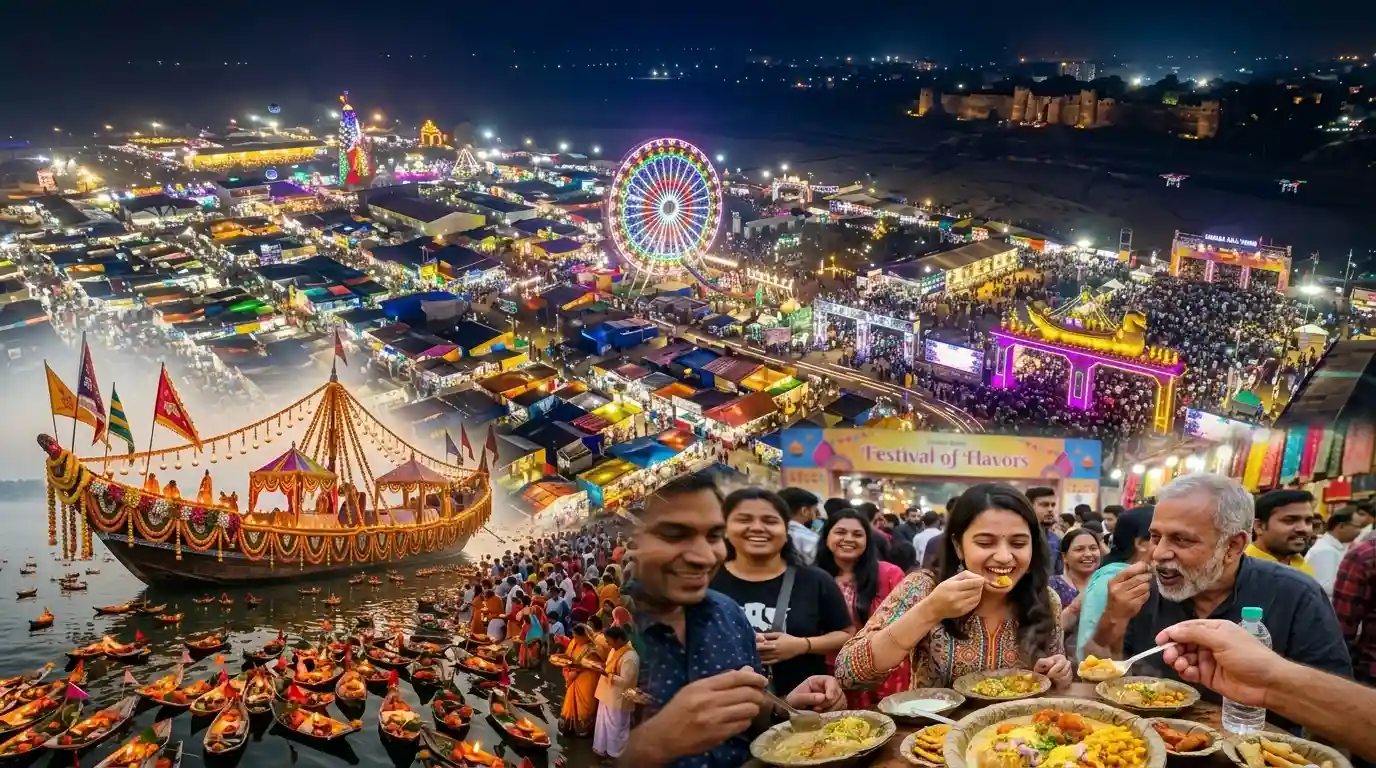
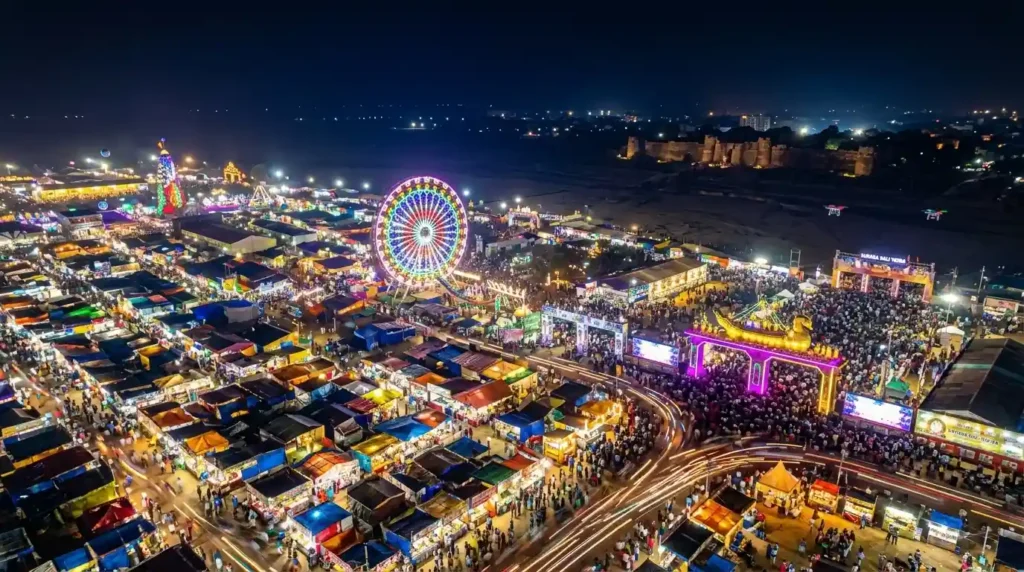
By nightfall the same riverbed is a blaze of ten thousand bulbs, a Ferris wheel turning against the full moon, the smell of frying thunka puri thick in the air, and the amplified thunder of a Chhau drum carrying half a kilometre. This is Kataka Bali Yatra — the Cuttack Baliyatra festival — and it is the only place on earth where a two-thousand-year-old funeral for an empire’s lost fleet is also, simultaneously, Asia’s largest open-air trade fair.
The Living Epic: How a Maritime Ritual Became a Commercial Phenomenon
The name is a sentence in itself. Bali Yatra means “Voyage to Bali,” and it is not metaphor. From roughly the 3rd century BCE onward, the merchant-mariners of ancient Kalinga — the Sadhabas — loaded vessels called boitas with pepper, cinnamon, cardamom, silk, camphor, ivory, gold and worked jewellery, raised their great cloth sails known as ajhala, and rode the retreating monsoon wind southeast toward Bali, Java, Sumatra, Borneo, Suvarnabhumi and Simhala.
They did not choose their departure date sentimentally. They chose it meteorologically. The full moon of Kartika marks the turn of the northeast monsoon, the moment the wind stops fighting a southbound hull and starts pushing it. Kalinga’s dominance of these lanes was famous enough that Kalidasa, in the Raghuvamsa, styles its king the lord of the sea. What began as a fleet’s departure ceremony — wives and mothers lighting lamps for men who might be gone eighteen months, or forever — became the ritual that anchors this entire festival. You can read the full commercial and naval story in our companion piece on the history of ancient Kalinga’s maritime trade.
The transformation from ritual to marketplace was organic and, in hindsight, inevitable. Where crowds gathered at dawn, sellers gathered by mid-morning. A ghat-side congregation on the sands below Barabati Fort became a produce market, then a cattle-and-cloth fair, then a district exhibition, then a state-level trade event under successive administrations, and finally the multi-hectare commercial organism it is today. The Mahanadi itself made this possible: every post-monsoon season the river withdraws and leaves behind a flat, dry, enormous alluvial plain directly adjacent to the historic core of the city. Nature, in other words, hands Cuttack a temporary exhibition ground the size of a small town — free, level, and available for exactly the weeks the festival needs it.
Very few festivals anywhere in Asia sit on this particular fault line: genuinely sacred at its origin, genuinely commercial at its scale, and genuinely unbroken in its practice. The kinship is visible across the water too — Thailand’s Loi Krathong and Cambodia’s Bon Om Touk float their own lamps on the same lunar cue, the surviving echo of a shared Indian Ocean world. To understand why this city and not another became the keeper of that memory, see the millennium city of Kataka.
The Twin Spirits: Dawn Devotion, Dusk Carnival
Bali Yatra runs on two clocks that never quite touch, and understanding this is the single most useful thing a visitor can know.
The Sacred Clock: Boita Bandana at Gadagadia Ghat
The festival opens on Kartika Purnima, before sunrise, with Boita Bandana — the worship of the boat. There is nothing commercial about it. Families walk to Gadagadia Ghat and to every pond, tank and river bend across Odisha, carrying miniature vessels made of paper, banana sheath, cork or sholapith, each holding a lit diya and offerings of pana (betel) and gua (areca nut).
The chant recited as the boats are released — Aa-ka-ma-bai — is understood to invoke the auspicious months of the sailing calendar, a mnemonic passed down so long that its literal parsing is now debated by scholars while its emotional meaning is understood instantly by every Odia child. Women perform the hulahuli, the ululation that has accompanied departures and homecomings on this river for centuries. Many take a ritual dip; the Mahanadi on this particular morning is held to be purifying.
What makes it extraordinary is the arithmetic of grief inverted into celebration. This is a remembrance of ancestors who sailed and often did not return, performed by descendants who now number in the lakhs, in near-total silence broken only by ululation and lapping water, in the last twenty minutes before dawn. The festival’s most-cited world record grew directly from this ritual: in 2022, more than 2,100 students from 22 schools folded over 22,000 paper boats in 35 minutes, entering the Guinness Book of World Records under the Cuttack Municipal Corporation’s organisation.
The Carnival Clock: Barabati Grounds After Dark
By 4:00 PM, the same geography has changed personality entirely. The Bali Yatra grounds — the Lower and Upper grounds spread beside Gadagadia Ghat, in the shadow of Barabati Fort — fill with a crowd that moves like a slow tide. Giant wheels, the maut ka kuan (well of death) with its motorcycles howling around vertical walls, laser and light shows, water sports on the Mahanadi, and the “Cuttack in Cuttack” pavilion that rebuilds the city’s landmarks in miniature.
Peak hours are roughly 6:00 PM to 10:30 PM, when the density on the main avenue can make forward movement a matter of collective drift rather than individual choice. Entry to the grounds is free. The crush is the point and the problem in equal measure — arrive at 3:00 PM if you want to actually shop, or after 9:30 PM on a weekday if you want photographs without shoulders in them.
Scale & Commerce: The Economic Engine on the Riverbed
Strip away the lamps and the drums and Bali Yatra is, unambiguously, a working trade fair — and one of the most consequential annual income events for rural Odisha’s producer economy.
The footprint. The fair has expanded dramatically across recent editions. It occupied roughly 34 acres in earlier years, was pushed out to around 100 acres in the landmark 2022 edition, and was configured across approximately 60 acres for the 2025 edition, which was formally branded “Historic Bali Yatra Cuttack.” Stall counts have run to roughly 1,600–1,700 constructed plots in recent years, drawing participants from all 30 districts of Odisha and from outside the state — a reported 1,420 of the 2025 edition’s plots were booked, by traders from 24 states. The 2026 edition returns the Upper ground to commercial use, and the two-ground plan has moved from proposal to practice: trader plot registration opened on 10 October 2026 against a published total of 2,044 plots — 1,452 on the Lower ground, sized 10×10 to 25×40 feet, and 592 on the Upper, sized 10×15 to 40×50 feet, laid out across about 1.93 lakh square feet in eleven blocks.
What is new in 2026. Indonesia is the official partner country for the 2026 edition, confirmed by Chief Minister Mohan Charan Majhi in September 2026 — a role Indonesia first took in 2025 on the strength of its maritime and cultural links with Kalinga. A Balinese cultural troupe is expected, and an Odisha delegation is to travel to Bali under a “Taking It to Bali” initiative, running the old trade route in the other direction. The 2026 edition is being run as a “Plastic-Free Green Balijatra”, the number of main cultural stages drops from three to two, and ORMAS will set up around 500 stalls for regional products and artisans. Water sports on the Mahanadi and Tourism Department river programming are planned, and the Chief Minister and Governor are both expected to visit.
The allotment system. Plot allocation has been progressively formalised. Recent editions have used an auction-based system with online and offline applications routed through the district administration and Barabati Palace, with nominal form costs and a per-plot registration deposit, and contested plots resolved by open auction. This matters commercially: it has pushed the fair from a first-come culture toward a transparent, bid-driven marketplace. For 2026 the calendar is fixed. Applications are taken at Barabati Palace, online and offline, in two phases — 10 to 17 October and 26 to 30 October 2026 — and an applicant may seek up to three plots. Auctions follow in November: a general auction from the 2nd to the 7th, held across Barabati Palace, the Collector’s office conference halls, the Cuttack Sadar sub-collector’s office and the Zilla Parishad hall; a special auction on the 9th and 10th; and a spot auction for whatever is left unsold on the 11th. The application fee and the per-plot deposit had not been finalised when registration opened — the 2025 edition charged 100 rupees for the form and 5,000 rupees per plot as registration money, which is the best available guide until the district publishes this year’s figures.
The sectors. The commercial floor breaks roughly into:
- Handloom & textiles — Sambalpuri ikat, Bomkai, Habaspuri, Kotpad tussar, Berhampuri patta, Dolabedi and Pasapalli weaves, sold at or near loom prices.
- Handicrafts — Pattachitra, palm-leaf etching, Cuttack’s own silver filigree (tarakasi), dhokra metal casting, applique from Pipili, stone and horn work.
- Automobiles & consumer durables — two-wheeler and four-wheeler pavilions, white goods, and electronics, with dealers timing annual promotional targets to the fair week.
- Rural artisan produce & food processing — self-help group output, honey, spices, processed millets, handmade soaps, bamboo goods.
- Machinery, agri-inputs and services — plus banking, insurance and government scheme outreach counters.
Government support. The state’s participation is not ornamental. Departments run themed pavilions, and the Odisha Rural Development and Marketing Society (ORMAS), under the Panchayati Raj and Drinking Water Department, anchors the Pallishree Mela — the rural producers’ section — with subsidised stall space for self-help groups, women’s federations and artisan clusters who could never afford commercial rates. For thousands of these producers, the Bali Yatra week is not a marketing exercise; it is a materially significant share of the year’s direct-to-consumer revenue, transacted without a middleman.
Footfall. The 2025 edition drew around 65 lakh visitors across its run, with a peak single day of roughly 12 lakh — figures the Kataka Collector put before a state-level review meeting in September 2026. That briefing also put the fair’s 2025 turnover above ₹400 crore, of which the ORMAS section alone accounted for about ₹57 crore. Peak evenings are the weekend nights and the closing days. The state deploys dedicated shuttle fleets (50-plus buses in the 2025 edition), expanded parking, and a substantial police and disaster-response presence. Anyone driving in should read Balijatra Cuttack parking and fairground maps before setting out; the ring road approaches are the first thing to seize up.
Kataka Bali Yatra at a Glance
| Festival Highlight | Details |
|---|---|
| Festival Name | Bali Yatra / Bali Jatra (“Voyage to Bali”), Cuttack |
| Festival Dates | 24 November to 1 December 2026 — Balijatra Cuttack 2026 opens on Kartika Purnima. Dates announced by the Kataka Collector; confirm any extension with the district administration |
| Duration | Eight days in 2026 (24 November – 1 December). Recent editions ran seven days and were extended by one or two; the 2025 fair gained a day at short notice |
| Location | Bali Yatra Ground (Lower & Upper), Gadagadia Ghat, Mahanadi riverbed, adjacent Barabati Fort & Stadium, Cuttack, Odisha |
| Size | ~34 acres historically → ~100 acres (2022 edition) → ~60 acres (2025 edition), varies by year and High Court/administration clearances |
| Stalls | Approx. 1,600–1,700 plots in recent editions; a reported 1,420 booked in 2025 by traders from 24 states. The 2026 edition runs 2,044 plots across both grounds — 1,452 Lower, 592 Upper |
| Average Footfall | Millions cumulatively per edition; lakhs on peak evenings |
| Entry Fee | Free |
| Key Sectors | Handloom, handicraft, silver filigree, automobiles, consumer durables, rural artisan produce, food, amusement |
| Signature Ritual | Boita Bandana at dawn on Kartika Purnima |
| Cultural Programme Applications | Open to institutions registered under the Society Registration Act, XXI of 1860. Troupes of 10–25 artists. Deadline 20 October 2026 — how to apply |
| Historical Origin | Departure ceremony of Kalinga’s Sadhaba mariners sailing to Bali, Java, Sumatra, Borneo and Sri Lanka, c. 3rd century BCE onward |
| World Record | Guinness World Record, 2022 — 22,000+ paper boats folded by 2,100+ students in 35 minutes |
| Nearest Airport | Biju Patnaik International Airport, Bhubaneswar (~30 km) |
| Related Festivals | Loi Krathong (Thailand), Bon Om Touk (Cambodia), Kalinga Bali Jatra (Paradeep, since 1992) |
From Sacred River Ritual to Mega-Trade Fair: 24 Hours at Bali Yatra
- 04:00 AM – Dawn Ritual (Gadagadia Ghat): Boita Bandana begins. Devotees float paper and sholapith boats with clay lamps, areca nuts, and betel leaves to the chant of Aa-ka-ma-bai.
- 06:30 AM – Kartika Snana: Sacred river dips along the Mahanadi, followed by morning temple visits across Old Kataka.
- 10:00 AM – The Trade Floor Opens: Morning hours are ideal for serious handloom, silver filigree, and wholesale shopping before the crowds arrive.
- 02:00 PM – Pallishree Mela Peak: Rural artisans and ORMAS self-help group stalls open for direct-from-weaver handicraft sales.
- 05:00 PM – Dusk Lights & Street Food: The night crowds pour in. Food lanes activate with fresh Dahibara Aloodum, Thunka Puri, and Odia sweets.
- 07:00 PM – Cultural Stages: Free open-air folk performances (Gotipua, Mayurbhanj Chhau, Sambalpuri dance) begin at Ganakabi Baishnaba Pani Manch.
- 08:30 PM – Peak Carnival Hours: Maximum crowd density. Mega rides, vertical well-of-death (Maut ka Kuan), and laser light spectacles operate at full power.
- 11:00 PM – Grounds Wind Down: Cultural stages conclude, traders restock pavilions, and the riverbank settles until the next cycle.
Culture & Nightlife: The Stage on the Sand
If the trade floor is the fair’s body, its cultural programme is the nervous system — and it is free, open-air, and of a standard that would command ticketed halls anywhere else.
The Ganakabi Baishnaba Pani Manch, named for the great folk poet and dramatist of Odia jatra theatre, is the traditional heart of it. Programming here leans classical and folk: Odissi in its temple-derived vocabulary; Gotipua, the acrobatic boy-dancer tradition from which Odissi itself descends, with its astonishing bandha nrutya postures; Chhau from Mayurbhanj, masked, martial and percussive; Sambalpuri and Dalkhai from the western districts, danced to a dhol-and-nisan rhythm that pulls audiences to their feet; and Ranapa, Ghumura, Sankha and Paika traditions rotating through the schedule. Recent editions have run a second, contemporary stage in parallel — playback singers, Odia film music, fusion acts, and celebrity headliners — with cultural programming extended toward 11:00 PM.
Performing at Bali Yatra: applications are open to registered institutions.
Cultural troupes do not get booked — they apply. The Cuttack District Culture Council invites institutions registered under the Society Registration Act, XXI of 1860 to apply for a slot in the cultural programme of Historic Balijatra Kataka-2026. Troupes run 10 to 25 artists, dance items are capped at 20 minutes, and completed applications are due by 20 October 2026. The full eligibility rules, item-by-item form checklist and submission routes are in our Bali Yatra cultural troupe application guide.
The Pallishree Mela deserves a visit as culture, not only commerce. It is the closest thing Odisha has to a live census of its craft traditions in one place: a weaver from Sonepur, a dhokra caster from Dhenkanal and a palm-leaf engraver from Raghurajpur working within a few hundred metres of each other, most of them selling directly, many of them demonstrating.
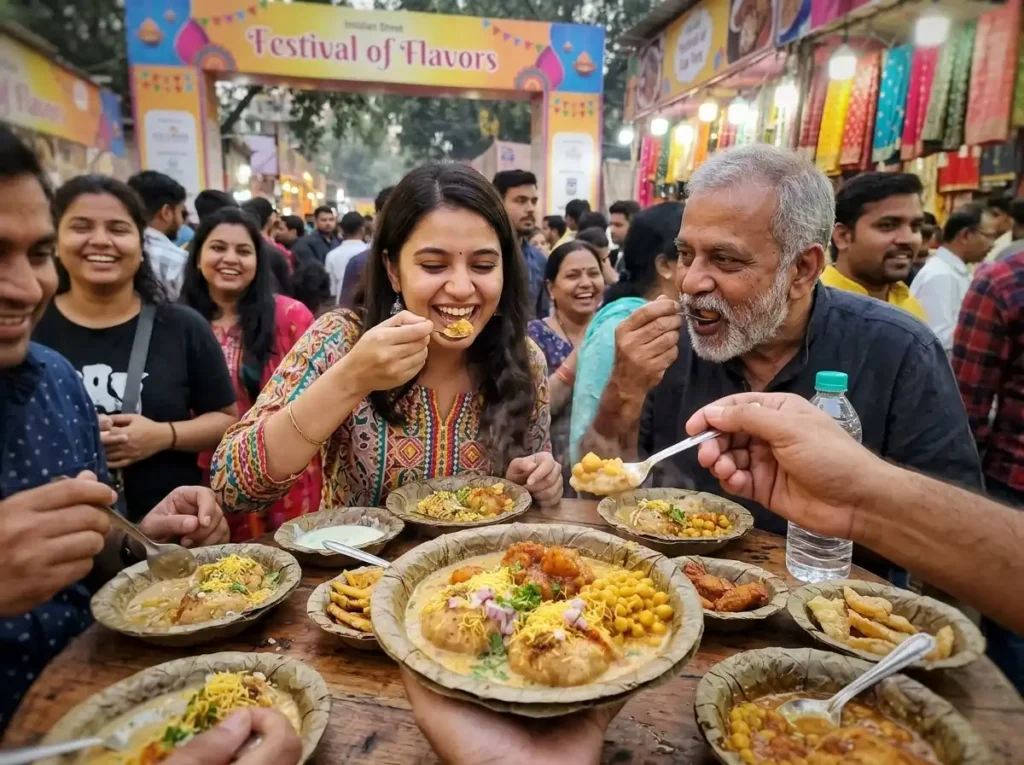
And then there is the eating, which is a discipline of its own. Cuttack’s Dahibara Aludum is the non-negotiable — vada drowned in spiced yoghurt with potato curry, ghuguni and a crackle of sev, sold from carts whose owners are locally famous by first name. Add thunka puri, gupchup, chhena poda, kulfi, Mathura cake and Banarasi paan and you have an itinerary that requires its own planning; we have mapped it in must-eat street food of Bali Yatra.
Between stages, drift toward the ghat once more after dark. The commercial roar is loudest at the centre of the grounds and falls away sharply near the water, and from the embankment, with the fair’s glow behind you and the Mahanadi black and moving in front, the two spirits of Bali Yatra briefly occupy the same frame.
Frequently Asked Questions
1. When is Balijatra 2026 in Cuttack? Balijatra Cuttack 2026 — written variously as Bali Yatra, Bali Jatra and Balijatra — runs from Tuesday, 24 November to Tuesday, 1 December 2026, eight days, opening on Kartika Purnima. Kataka Collector Dattatraya Bhausaheb Shinde announced the window in September 2026. Ground layout and any extension are notified separately by the district administration, so check the official advisory before booking travel; the 2025 edition was extended by a day at short notice.
2. Why is Bali Yatra called Asia’s largest open-air trade fair? Because of the combination of three things: a contiguous open-ground footprint that has ranged from roughly 34 to 100 acres, roughly 1,600–1,700 commercial stalls in recent editions and 2,044 plots across both grounds for 2026, and cumulative footfall in the millions over a single week-long run — all conducted outdoors on a riverbed rather than inside an exhibition hall.
3. What exactly is Boita Bandana and can visitors take part? Boita Bandana is the pre-dawn ritual on Kartika Purnima in which people float miniature boats carrying lit lamps and offerings, commemorating the departure of Kalinga’s ancient mariners. It is public and participatory. Visitors are welcome at Gadagadia Ghat; arrive by 4:00 AM, buy a boat and diya from vendors near the ghat, and follow the crowd’s lead respectfully.
4. Is there an entry fee, and what does it cost to attend? Entry to the Bali Yatra grounds is free. Costs are entirely discretionary — food, shopping, and amusement rides are individually priced. Some editions have offered premium passes for reserved seating at headline cultural events.
5. What is the best time of day to visit, and how do I avoid the crowds? Go at 4:00 AM on Kartika Purnima for the ritual, and between 2:00 PM and 4:00 PM on any weekday for serious shopping. Avoid 6:00 PM to 10:00 PM on weekends unless the crush is what you came for. Use the shuttle buses rather than driving in; parking near the ring road saturates early on peak evenings.
6. Can my dance or music group perform at Bali Yatra? Yes, if it is a registered institution. The Cuttack District Culture Council accepts applications from institutions registered under the Society Registration Act, XXI of 1860, with a troupe of between 10 and 25 artists, all above fifteen years of age. Dance items are limited to 20 minutes and selected troupes are paid an honorarium by RTGS or NEFT. Applications for Historic Balijatra Kataka-2026 close on 20 October 2026 — see our cultural troupe application guide for the full requirements.
Kataka Bali Yatra is not a heritage re-enactment. It is the same act, performed continuously, by the descendants of the people who first performed it — and it happens to have a Ferris wheel attached. Come for the dawn. Stay for everything that follows.